
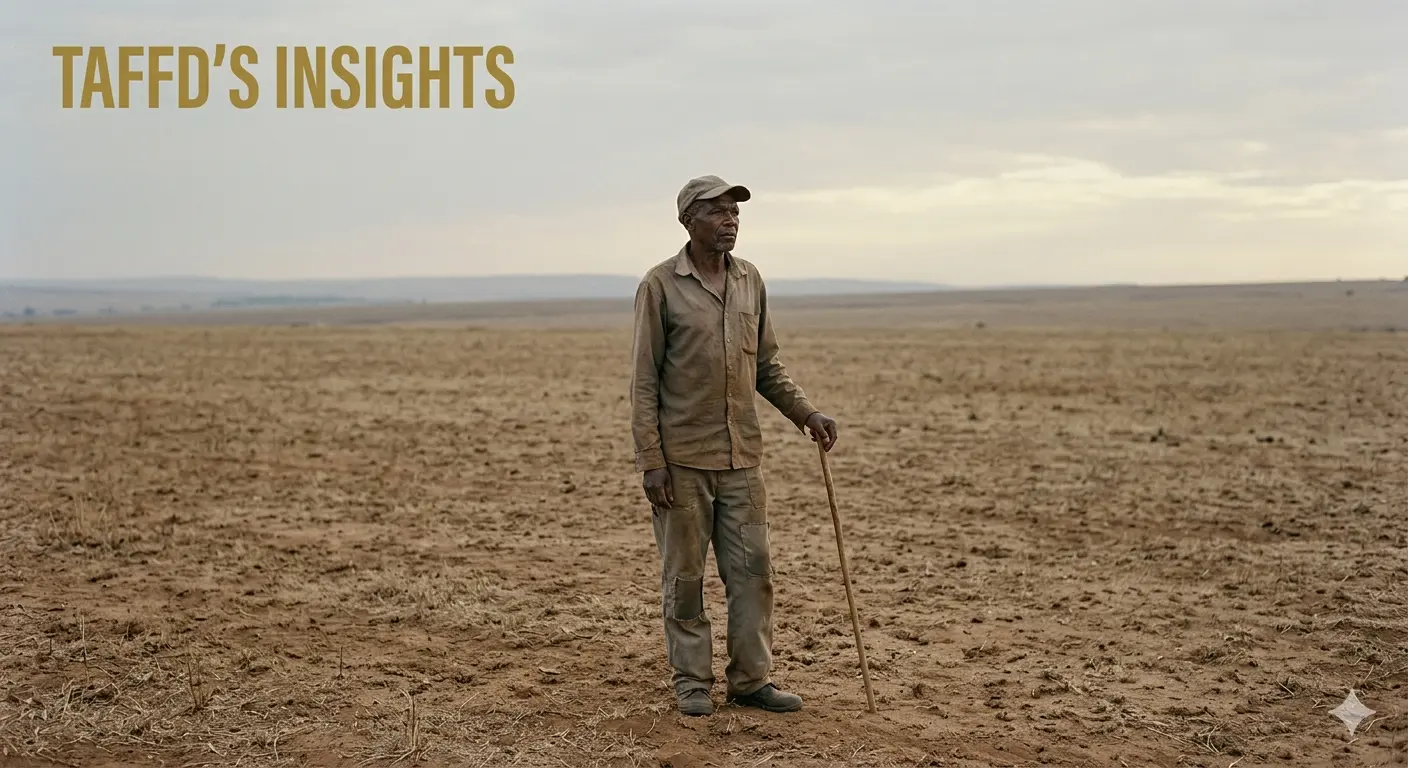
In 2025, debt financing accounted for 41% of all capital deployed across African tech. Up from 17% in 2019.
In agtech specifically, asset-backed financing has become the preferred instrument over equity. Investors are lending against specific assets (equipment, inventory, logistics infrastructure) and collecting predictable returns regardless of what happens to the business they funded.
2025 was also the first year since tracking began that both total agtech funding and deal count declined simultaneously.
Could these two things be connected?
What equity and debt actually mean for the person building
Equity and debt are not just different financial instruments. They represent different relationships between capital and risk.
When an investor takes equity, they share the outcome. If the business fails, they absorb the loss alongside the founder. That shared exposure creates something beyond capital. Investors with equity bring networks, market access, introductions, and follow-on funding signals. They have a reason to help the business succeed because their return depends on it.
When a lender provides asset-backed debt, the relationship is structurally different. The lender collects returns regardless of what happens to the business. If repayment fails, the lender recovers the assets backing the loan. The founder absorbs everything else.
At that point, the label investor expires. They are lenders.
And the distinction matters enormously for the person who has to sign the agreement and then go back to building in one of the most difficult operating environments on earth.
Could the shift from equity to debt in African agtech be transferring risk from capital to founders in a way that the aggregate funding numbers are not capturing?
The operating environment that makes this transfer dangerous
African agtech founders are not operating in a stable environment where the primary variable is execution quality.
Rainfall is no longer a cycle. It is a variable. Currency is not a baseline. It is a leak. Input supply chains do not just underperform. They disappear. Policy shifts do not announce themselves. They restructure entire market conditions overnight. Infrastructure failures are not edge cases in this environment. They are the environment.
In that context, an equity investor absorbs those shocks alongside the founder. A lender does not. The repayment schedule does not adjust for floods, currency crises, or policy reversals. The asset backing the loan does not care that the harvest failed.
What if the combination of an increasingly volatile operating environment and an increasingly creditor-driven financing model is creating a level of personal risk exposure for African agtech founders that has no historical precedent in the sector?
And what if that combination is already influencing who decides to build in this sector and who decides not to?
The decline that the data cannot yet fully see
The Briter 2025 Annual Investment Report confirms that deal count in African agtech declined in 2025 alongside total funding. Most analysis reads this as a market correction or a reflection of broader global capital tightening.
But could it also be an early signal of something happening at the founder level rather than the investor level?
Founder pipeline decline does not announce itself. It does not produce a single visible event that ends up in a report. It happens gradually. One talented person calculates the personal downside of building in agtech and chooses fintech instead. One experienced operator looks at the debt terms available and decides the risk is not worth carrying alone. One promising team with real capability exits the sector before they ever show up in a deal count.
What if the 2025 decline (the first simultaneous drop in both funding and deal count since tracking began) is not only investors pulling back? What if it is also founders stepping back (not dramatically, but rationally, one decision at a time) from a sector where the financing structure increasingly asks them to carry what capital refuses to share?
What if that process has been happening for two years already and 2025 is simply the first year it became large enough to appear in aggregate data?
What a shrinking founder pipeline does to the sector over time
African agtech does not just need capital. It needs a specific kind of founder. Someone with the willingness to operate in complexity, the patience to build in fragmented markets, and the resilience to navigate an environment where almost nothing works the way it should on paper.
That kind of founder is not abundant. And they have options.
Fintech is growing. Healthtech is attracting attention. Logistics and mobility are pulling talent. All of these sectors carry risk. But none of them currently ask founders to absorb the full weight of operational exposure while capital sits behind asset-backed protection collecting predictable returns.
What if the financing structure of African agtech is slowly making it the least attractive sector for exactly the kind of founder it most needs?
What if around a dozen companies capturing well over half of all agtech funding between 2016 and 2025 (according to AgBase and the Briter 2025 Annual Investment Report) is not just a capital concentration story? What if it is also a signal that the sector is consolidating around the few founders who had enough existing assets to access debt financing (while the broader founder pipeline that did not have those assets silently exited)?
The question investors may not be asking
Post-farm infrastructure investors are building logistics networks, cold chains, and food processing facilities. Their returns depend on throughput. Throughput depends on agricultural output. Agricultural output depends on on-farm innovation. And on-farm innovation depends on founders willing to build in that space.
If the financing structure of the sector is gradually discouraging exactly those founders, could post-farm investors be creating a long-term threat to their own return thesis without realising it?
Could the lender model that protects capital in the short term be undermining the founder pipeline that generates the agricultural output post-farm infrastructure was built to distribute?
What if the risk transfer from capital to founders is not just a fairness problem? What if it is also a systemic efficiency problem that will show up in throughput numbers before it shows up in investment reports?
The questions this pattern is not yet answering
The data today can confirm the financing shift. It can confirm the deal count decline. It can confirm the capital concentration. What it cannot yet confirm is how much of the founder pipeline narrowing is already underway beneath those numbers.
That question may only become answerable when the damage is already done.
So the questions worth sitting with now are these.
What would a genuinely founder-protective financing structure look like in African agtech (one where the risk of operating in a volatile environment is shared between capital and founder rather than transferred entirely to the person building)?
What if first-loss guarantee mechanisms (where development finance institutions absorb the initial layer of loss before founders face personal exposure) could bring equity-like protection to a sector that has drifted almost entirely into creditor relationships?
Who has both the mandate and the urgency to design that structure before the founder pipeline narrows to the point where the sector can no longer generate the innovation it needs to function?
And what does African agtech risk if the answer to that question is nobody (and the sector discovers it has optimised for capital protection at the expense of the human infrastructure that actually builds things)?
This is the third in a four-part Prognosis Series examining the structural fault lines in African agtech investment. The fourth release examines the Policy Window (the intervention that needs to happen before 2027 confirms what the data is already signaling today).